
The Trump

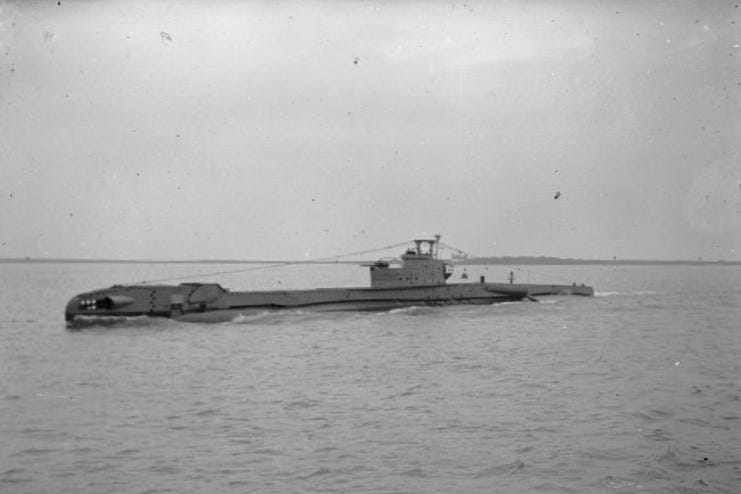
In his state visit His Highness King Charles gifted the President the original boat’s bell from his namesake HMS Trump. I immediately wondered what kind of boat the Trump was and what she had gotten up to during her career and I’m sure some of you did too….
So Trump was built at Vickers Armstrong at Barrow having been laid down on 31 December 1942 and commissioned on 6 July 1944 with the Pennant number P333.
It was a T-class submarine from the third group, measured 83.2 metres in length by 7.8 metres across and powered by two diesel engines (2500 HP each) and two 1450 HP (each) electrical engines for a top speed of 15.5 knots (surface) and 8.75 knots (submerged). Importantly, for any submarine, is the dive depth which was 107 metres.
By means of comparison the Graph (U-570) had a top speed of 17.7 knots surface and 7.6 knots submerged and a dive depth of 230 metres.
After her trials in the North Sea, under Commander E. F. Balston, and with the War in Europe winding down, the Trump was dispatched to Australia, via Gibraltar and the Suez Canal to operate against the Japanese where she carried out four war patrols.
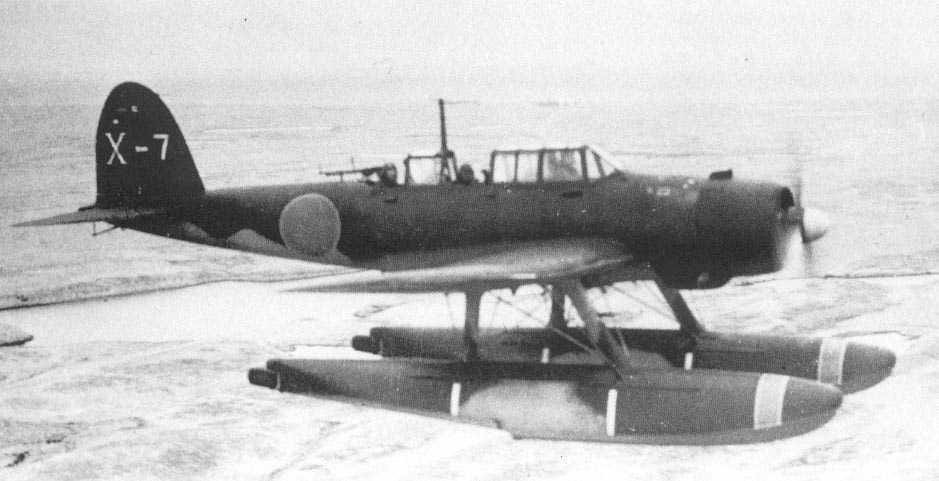
On 30 March the Trump was attacked by an Aichi E13A “Jake” seaplane which dropped two bombs whilst the submarine crash dived suffering minor damage and broken lights onboard. On the 13 April she came alongside the tendership, HMS Adamant in Fremantle.
Over the next few weeks the submarine took part in exercises off Fremantle on the 4 May to conduct a patrol in the eastern Java Sea sighting several friendly submarines on her journey out as well as being attacked by a twin engined on a low approach dropping one bomb as the Trump, again, crash dived and suffering minor damage.
On 12th May they sighted their first enemy vessels, an escort ship around 4000 yards away with the Trump, on the surface, slipped away only to see another within fifty minutes rigged for depth charge attack but the submarine escaped again without problems and headed for the Sapudi Strait. The following day the Shosei Maru, a guardship, was sunk by gunfire by Trump who also fired three torpedoes at an escort vessel but missed with all three but they weren’t finished. An armed trawler towing a sampan was sighted and the submarine fired their deck gun into the trawler’s engine room, knocked out their defensive gun and set her on fire. All the Japanese could do was return fire with small arms to no effect against the British submarine who had fired 19 rounds into her.
An escort vessel appeared and fired on Trump with a 3” gun causing her to dive to safety and allowing the Japanese vessel to pass overhead, dropping 16 depth charges on the hidden submarine. Having hit the bottom at 44 metres and the crew stopping for lunch, they freed themselves and headed for the surface spotting the trawler still aflame whilst another escort vessel was in range. Three torpedoes were fired but their trails attracted attention and the vessel avoided them and returned fire with depth charges which were as effective as the Trump’s torpedo attack had been and both sides withdrew from the area.
On the 25 May the sank a small two masted Japanese sailing vessel with gunfire off Sabalana with five hits from seven rounds fired at 2000 yards. Four days later they hit a coaster, again with gunfire, at 6000 yards but only hitting with one third of the 83 rounds fired. Continuing their inaccuracies they missed two coasters on the 31 May with torpedoes.
On 1 June the Trump lay off Bueleleng roads, Bali in the early morning and conducted a periscope patrol sighting several wooden ships at anchor whilst others were on slips under construction and a nearby camouflaged shed. Lieutenant Catlow decided that the facilities needed “softening up” and surfaced to fire upon, and sink, one of the ships at anchor, one on the slips, a bridge and a fishing boat before setting course for the Kangean Islands.
Their accuracy continued to be problematic with a gun attack on a tanker that saw thirty five rounds fired but only twelve hits seeing her run out of ammunition and have to resort to torpedo attack, firing two salvoes of three torpedoes but only striking the target with one. To be fair that one did blow the stern off the vessel but there had been a lot of missed opportunities by the crew. On the 17 June they arrived back at Fremantle and ended their patrol.
Their fourth war patrol began on 16 July alongside the Tiptoe with both heading for the Sunda Strait via the south coast of Java.
After the uneventful sweep of the southern Java coast they entered the Sunda Strait on 28 July.
On 2 August the two T-class submarines engaged and sank two Japanese vessels with gunfire once their escorting submarine chaser had left them. Two days later Trump attacked the Tencho Maru, part of a convoy escorted by PB-109 which had left Batavia the day before. This was pretty much the end of her war service and by the 21st August she was again in Fremantle with Tiptoe
Post War the Royal Navy scrapped a lot of boats, and ships, but the Trump survived with all of the other submarines that were welded rather than riveted as these were considered to be stronger against water pressure. She was also converted with the now irrelevant deck gun removed and the conning tower remodelled as a sleeker fin and the bow remodelled.
Actually I should clarify why the deck gun was irrelevant. The nature of Submarine warfare had shown that, on the whole, any Submarine on the surface was vulnerable to attack so it was better to be underwater where possible for as long as possible. Also with the Cold War it was envisioned that secrecy and surveillance would be the order of the day rather than convoy decimation.
The engines were also modified (supercharged) and the hull extended and rejoined the 4th Submarine Flotilla based at Sydney along with the Taciturn and Tabard and would work with the Royal Navy’s Far East Command as well as with the Royal Australian and Royal New Zealand Navies and even took part in an anti-submarine exercise off New Zealand.
She was the last British submarine to operate in Australia in 1969 as she was temporarily assigned to the newly created 1st Australian squadron until the new Oberon class submarines were delivered.
She was scrapped in Newport in 1971 after a 27 year career.
The torpedoes were likely chemical / gas propulsion notorious for giving away location due to the line of bubbles. Later torpedoes were electric for that reason. The Americans had superior radar / sonar equipped submarines by 1945. The technology was changing so fast they could hardly refit the boats fast enough.
Fine service for a lucky boat