
The Flower class Sloops
Mine sweepers and Q-ships

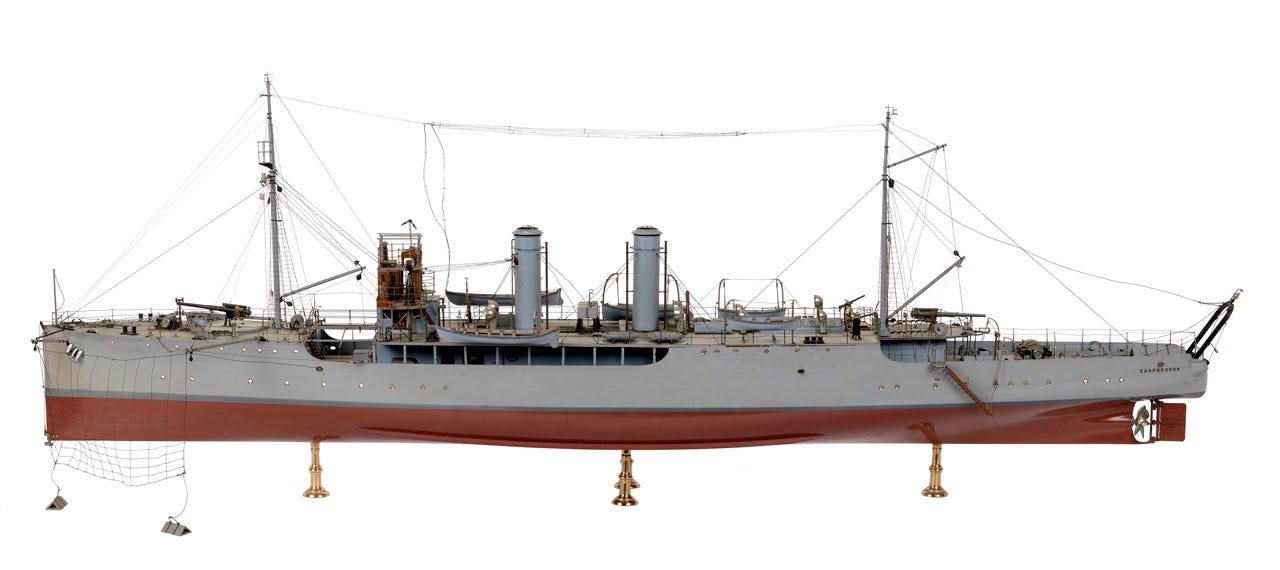
The First World War threw up certain challenges that the Royal Navy had seemingly overlooked in its pre-War planning and a solution would be needed.
The first was Sea mines.
Although sea mines had been a thing before the war there was no real plan for clearance as the fleet would win its battles in open water far away from the coastal mine fields. Should they need to enter enemy waters then ship’s boats would search or civilian trawler crews would sweep for mines under the protection of the fleet’s guns.
The problem in the Dardanelles showed that civilian crews were not too keen at being shot at and fishing trawlers not really designed for anti-mine work.
The other issue, predictably for this substack, is U-boats.
No one had thought pre-war about how successful submarines would be or how to combat them.
So in comes the Flower class sloop. Smaller than a destroyer with a triple hull to provide protection against a mine explosion. They were also designed to be built at civilian ship yards so as to not negatively impact the building and repair facilities of the Royal Dock Yards. They could also be built quite quickly in these yards with an average of five months.
The successful U-boat campaign of 1916 meant escort ships were needed for convoys and attacking U-boats.
These vessels were also armed and disguised as Q-ships which are, in themselves a violation of the rules of Naval warfare and that is before the war crimes alleged to have occurred. Ships and trawlers were disguised as civilian ships and their 4.75” deck guns hidden. When intercepted by a surfaced U-boat, when it was at its most vulnerable, the white ensign would shoot up the flagpole and the guns exposed and fire upon the U-boat.
A more legitimate use of the ships was assigning them to act as Convoy escorts when the system was introduced in 1917 as well as being used as a platform for dropping depth charges on the submerged enemy. With the lack of anti-mining operations in this stage of the war saw large numbers of the mine sweeper variants being moved to escort and anti-submarine work.
There were several subclasses of the Flower class that were developed through the War with the first being the Acacia Class which were built and pushed into service in 1915 with twenty four being completed. They were 76.2 metres long and were 1200 tons. Armament was light, two 12 pounder guns and three 47mm anti-aircraft guns with a top speed of 17 knots.
The Azalea class was a modification of the Acacias and were ordered in May 1915 and was broadly similar but with slightly more powerful armament including a pair of 4” Quick firing guns or a pair of 4.7” Quick firing guns. As well as two 3 pounder anti-aircraft guns. There were another twelve ships built of this class.
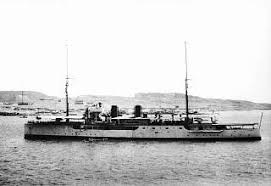
The largest class, of forty-four, was the Arabis class, which was ordered in July 1915 and was open to usage as a minesweeper, patrol vessels, tugs and transports for personnel and cargo. Again, they were broadly similar to the preceding classes.
In 1916 the first Q-ship variant, the Aubrietia class, of twelve vessels, was laid down. They were slightly smaller than the mine sweeper variants at 77.8 metres long with a top speed of 17.5 knots, though in reality it was usually 16.5 knots in the field. They were designed with a heavier firepower with three 12 pounder guns and two 3 pounders for anti-aircraft work but they usually ended up armed with two 4” quick firing guns and a 3 pounder anti-aircraft gun, and finally depth charges. They were also built around the basic Flower design but with more of a civilian merchantman style around the hull to add to the Q-ship’s disguise.
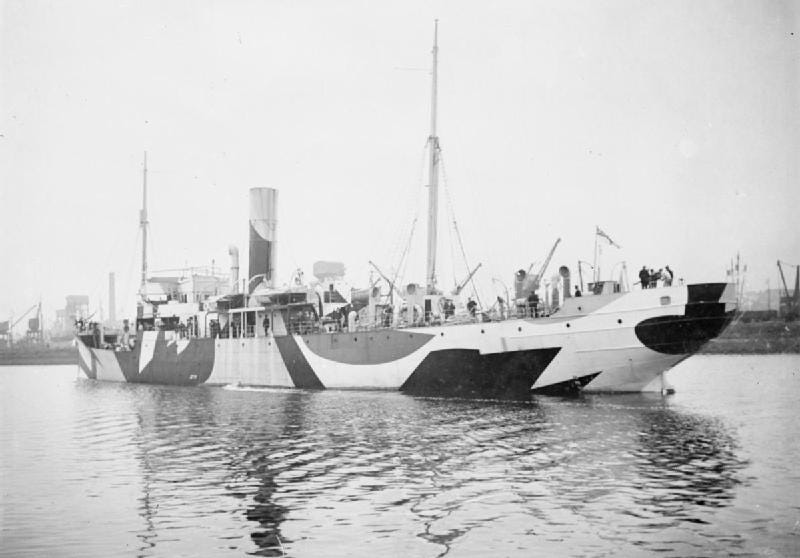
The final variant, the Anchusa class was ordered as convoy escort and Q-ships in 1917 with twenty-eight of them being built as an evolution of the Aubrietia class, designed to carry two 12 pounder guns, a 7.5” howitzer and four depthcharge launchers.
Are there any survivors?
As I’m writing this - yes but not for long.
Both HMS Chrysanthermum and Saxifrage survived the First World War and the Second World War though the latter was as reserve ships.
The Chrysanthemum was completed at Armstrong Whitworth in 1917 and deployed to Gibraltar to serve in the 11th Sloop flotilla to combat the severe U-boat threat in the Mediterranean. Post War she moved to Malta as a target towing vessel, assisted in the repatriation of Turkish Prisoners of War and for the burial at sea of the former governor, Walter Congreve and rescuing British nationals during the Spanish Civil War.
She was retired to the Thames alongside HMS President (Saxifrage) as a drill ship and finally decommissioned in 1988. There are images of her in the Thames through the years but you will probably have seen her in disguise in Indianna Jones and the last Crusade.
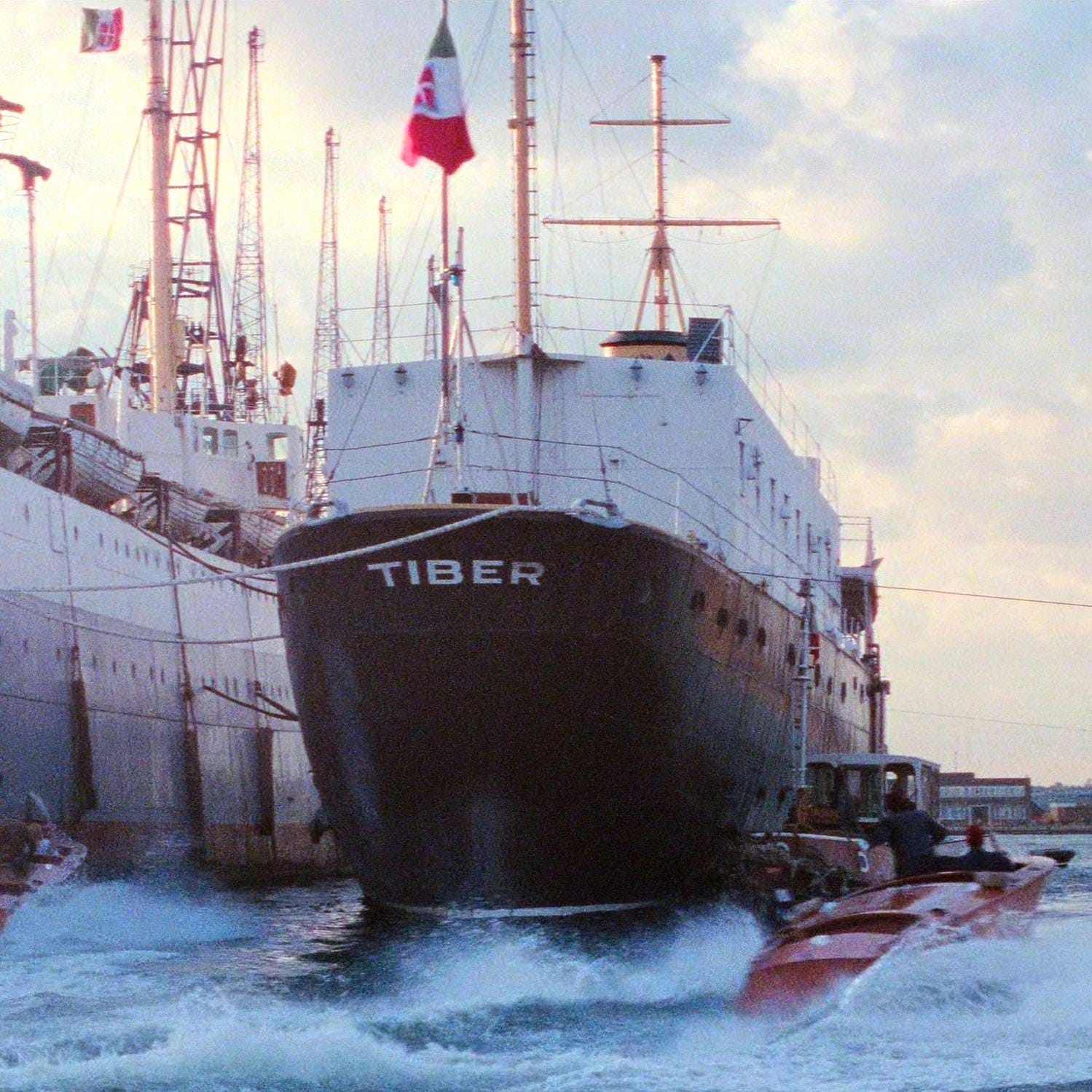
In the motor boat chase she is the ship Tiber which is being nudged into another anchored boat when Ilsa goes between the two ships.
Go between zem?! Are you Crazy?!
She was then moved to the Medway and languished awaiting some kind of fate but her hull rusted quickly and in 1995 she had to be scrapped.
The Saxifrage had a broadly similar career.
Built at the Lobnitz & Co. in Scotland in 1918 and went on to engage nine U-boats including chasing one at night on 28 April, after the liner Oronsa and Merchantman Damao. This was more than likely U-91 which was the U-boat that sank these two vessels, and the French Raymond. The U-boat was neither damaged or sunk in this action but it was driven away.
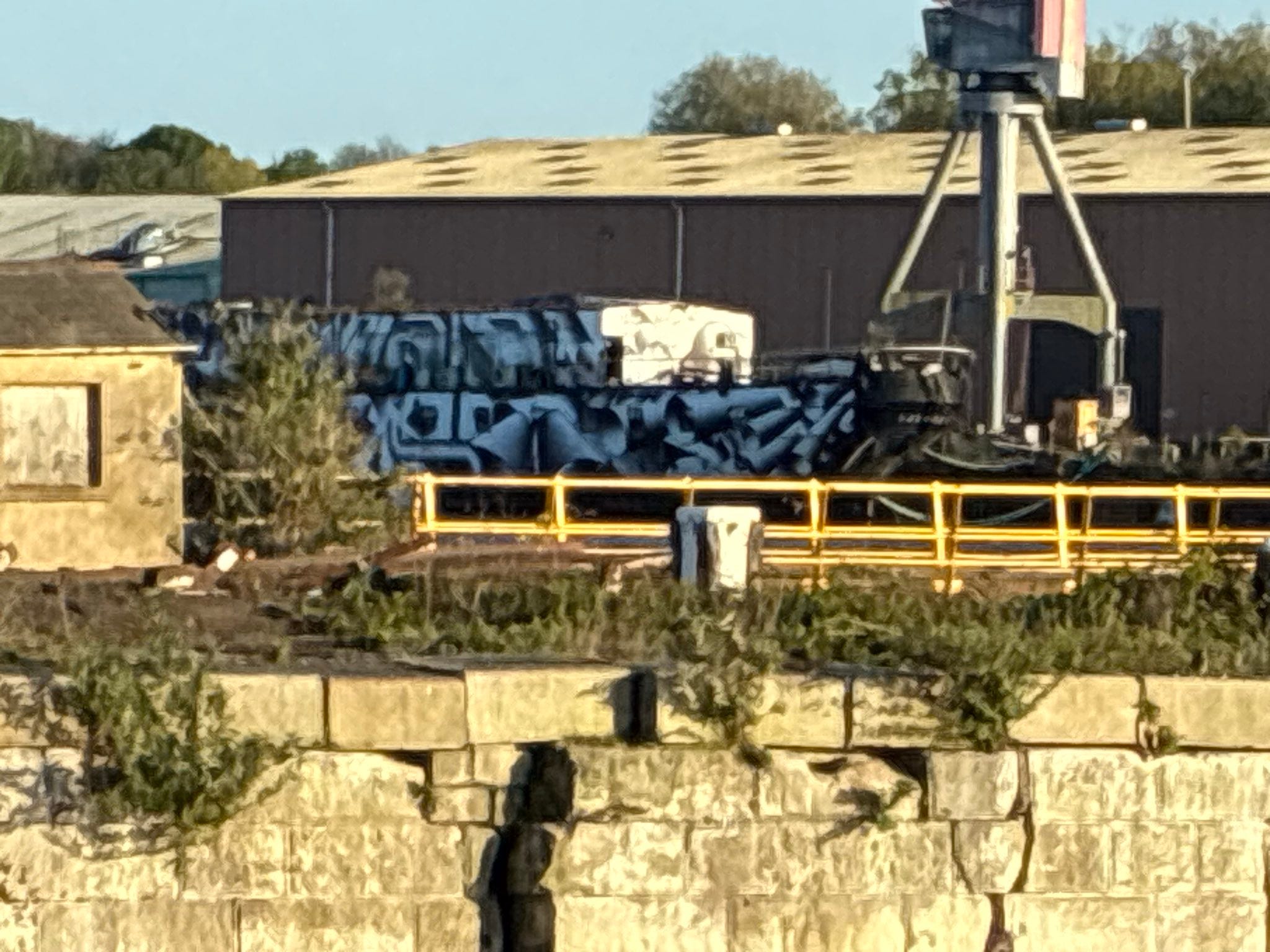
Post War she was moved to the Thames where she took over as the New HMS President, a drill ship for the Royal Navy Reserve at Blackfriars. During the Second World War she was refitted to have a large deck superstructure for defensive gunnery training for merchant seamen. She carried on in this role until 1988 like her sister. Unlike her sister though she was saved by a charitable trust and used for various commercial purposes before she was moved to Chatham to make way for the Thames tideway tunnel. All attempts to raise money for her restoration failed as did attempts to find her a berth where she could be preserved (like at Chatham Dockyard) and with the sail of Chatham Docks, there was no more road to run upon and she is in Erith about to be scrapped.
If you missed it, I did do a podcast episode on the ship, museum collections and why she couldn’t be saved.