
The Cardinal
The French battleship Richelieu at War

I spend a lot of time talking about the German navy… or the Royal Navy and occasionally - occasionally - the Austrian Navy but I haven’t really spoken about the French in more than a passing way so to rectify this here is the story of the battleship Richelieu.
So we can agree that Navalism and the arms race through the first decade of the 1900s is one of the many sparks of the First World War? Well post War there was the Washington Naval agreements to limit the construction and overall tonnage of the fleets with the US and UK having the largest, then Japan, then France and Italy and this was all fine.
Through the pre (Second World) War period there were fewer concerns about Germany and more of a nervous look at Italy, especially from France who shared a border and when news of the new Littorio class battleship, sporting nine 15” guns, a belt armour of 11” and a top speed of 30 knots came to Paris steps were immediately taken.
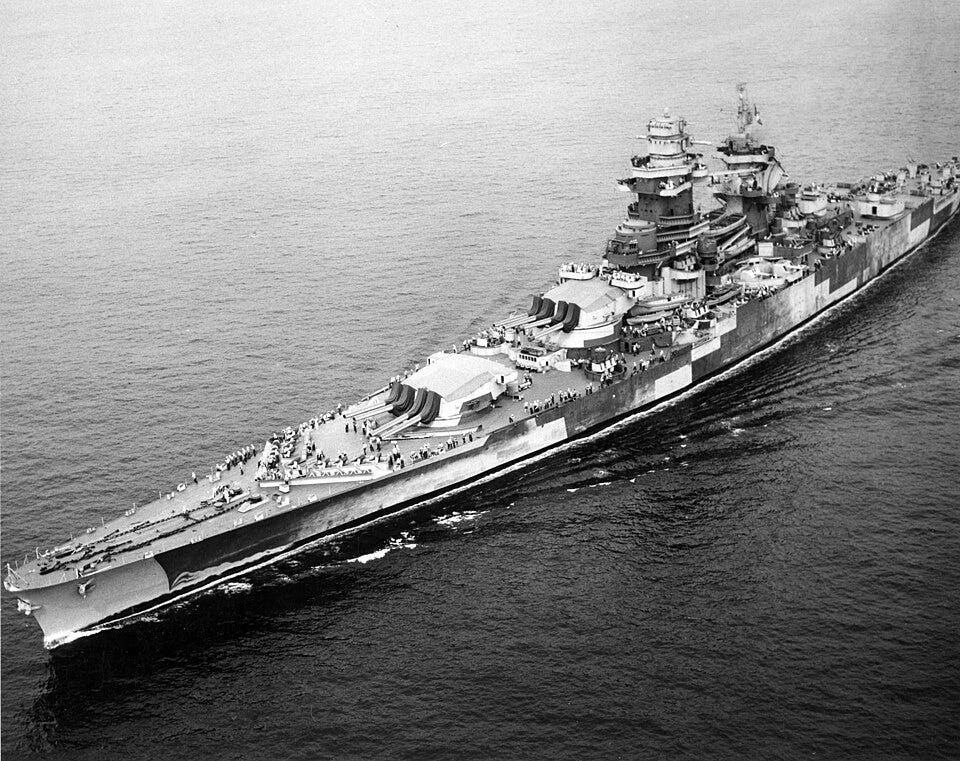
The Richelieu class battleship was a larger version of the Dunkerque class and sported eight 15” guns mounted in two quadruple turrets, nine 6” guns, twelve 3.9” anti aircraft guns, eight 1.5” anti-aircraft guns as well as 20 machine guns. Her armour was also designed to withstand 15” shells with a belt of 13”, main deck of 6.7”, turrets with 17” and a 13” conning tower displacing with a full load, 47728 tons and able to move up to 25 knots.
The Richelieu, the lead ship in the class, was laid down at Brest in 1935 and completed and commissioned in April 1940, one month before the invasion of France but her commissioning trials and gun rest firing were not complete until a few days before France surrendered.
The French Naval command knew there was not much they could do to stop the German invasion and the aerial dominance of the Luftwaffe meant that the fleet would be in danger so they would need to withdraw to safety, but to where? Several ships did head for England but the larger vessels moved to French colonies in Africa with Richelieu heading to Dakar with an extra 250 Naval cadets and gold reserves to safety. As the Germans approached Brest she escaped, fending off air attacks from German bombers and she would arrive in Dakar on 23 June though the journey had seen her rudder motor break down a few times.
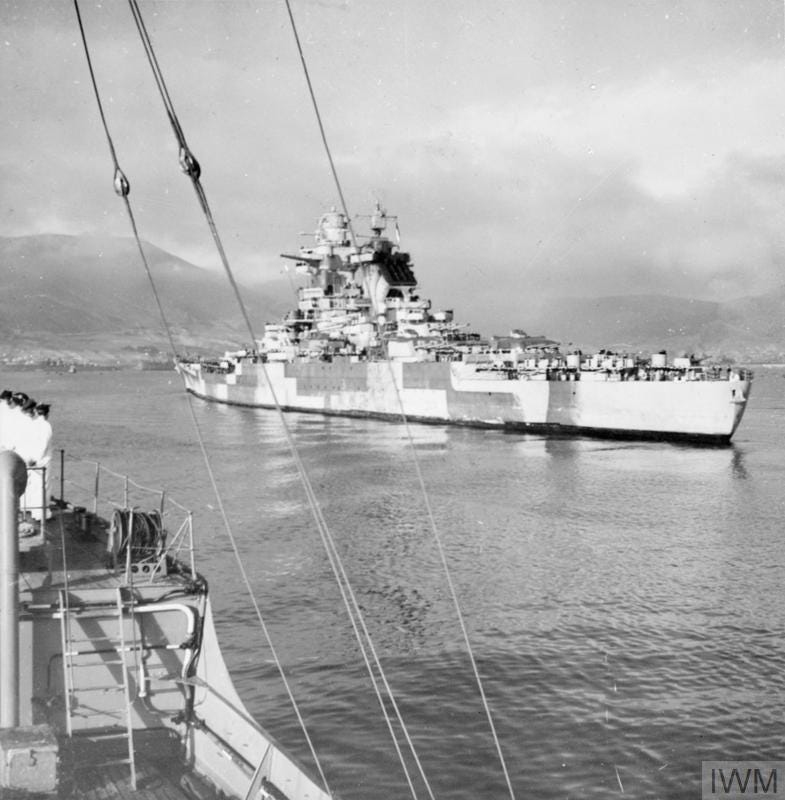
Dakar was not the safe haven that was hoped but it was not the Germans who were hunting her but rather France’s former Ally, Britain. London was very concerned by the French fleet and its ultimate fate - especially if that fate was to see them under the Kriegsmarine’s flag. Various British ships, including Dorsetshire, were moved to watch the French ships. Admiral Darlan, sent a message to the battleship’s commander to be wary of the Royal Navy and to set scuttling charges in case she was to be captured, after all she had used half of her fuel getting to Dakar and did not have a large amount of charges for the main guns so a fire fight would be limited. She would move to Casablanca though followed by the carrier Hermes with aircraft on standby, though she herself was covered by French coastal artillery. Darlan ordered her return immediately to stop her joining the “Free French” forces and stay under Vichy control and her Captain grudgingly acquiesced.
Fearing the Germans were going to seize the ships the British carried out Operation Catapult and off Dakar Force H’s ships and aircraft began operations. I think the Operation requires a much longer post but to cut a long story short, the Richelieu did suffer damage from a torpedo that exploded against the hull and tore a 31 by 28 foot hole between two of the prop shafts and caused her to take on 2400 tons. Dakar did not have the facilities to repair her adequately and so it took time to pump her out and repair the hole.
Several months later, in September, the Royal Navy came back for another crack at the French fleet and Operation Menace was carried out - again this requires a longer dive but during the battle the Richelieu was one of the main concerns of the British ships, a concern that was warranted when she opened fire with warning shots on Free French vessels.
The Royal Navy, in its usual style, decided to attack the port directly and Barham and Resolution attempted to fire on her but the visibility was not great and they had to give up and the French battleship was turned, using tugs, to face the danger should the British strike again. The FAA struck with Skuas and Swordfish but to no avail but lost six aircraft to Richelieu’s anti-aircraft gunners before the fleet sailed in again and fired their guns on the battleship which lost her No.7 gun and No.8 gun damaged. One of the 6” guns did hit Barham before she returned fire causing minor damage and despite an ongoing duel with the Barham she scored no further hits until 25 September in a brief exchange that saw both ships hit but not seriously damaged. The British then patrolled the area until October in the hope of catching the battleship if she returned to France.
In the wake of the attack the Richelieu was put under repair again but this was hampered by not only the lack of proper facilities but also the German Armistice Commission who were not keen on her being brought to combat readiness where she could fall into British control. However after Operation Torch the French ships fell into the hands of the Allies and Richelieu was taken over to America for modernisation and repair. She arrived at Dock No.5 at the Brooklyn Navy Yard on 11 February 1943 for her works.
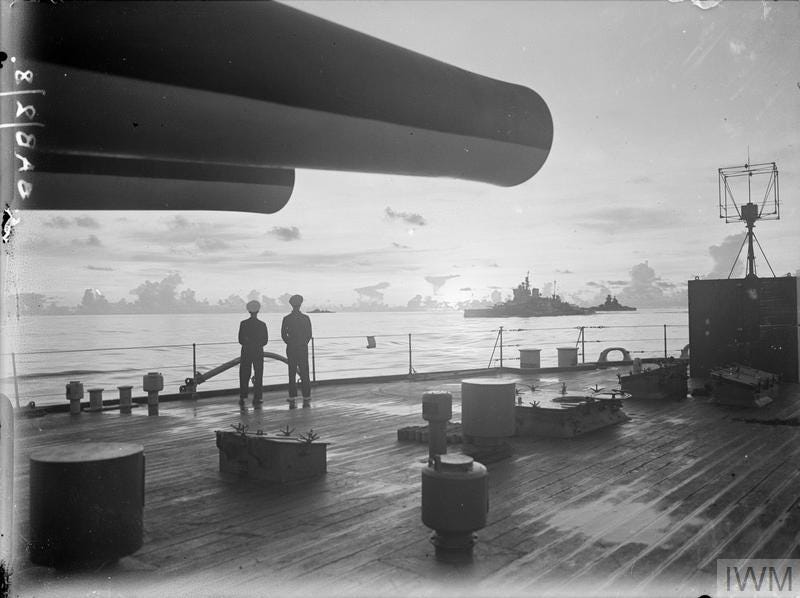
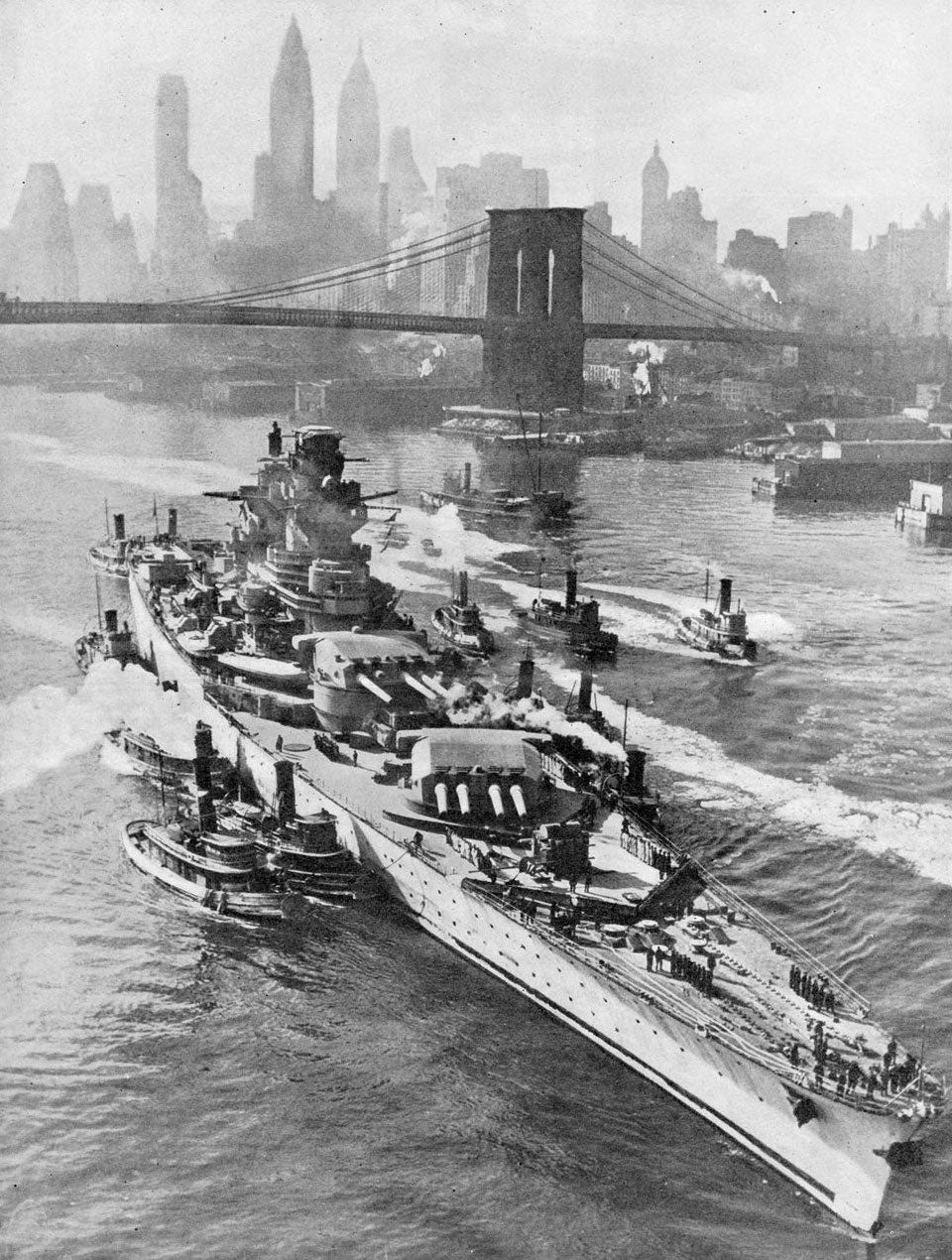
The works were extensive and included a fresh armament configuration, US equipment for float aeroplanes were fitted and the anti-aircraft guns replaced as well as extensive works to repair the damage, and the damage caused by the original repair work. Her anti-aircraft guns were changed to 12 4” guns, fifty-six Bofors guns and forty eight Oerlikon cannons. She would also receive new Surface search radar and SA-2 air search radar.
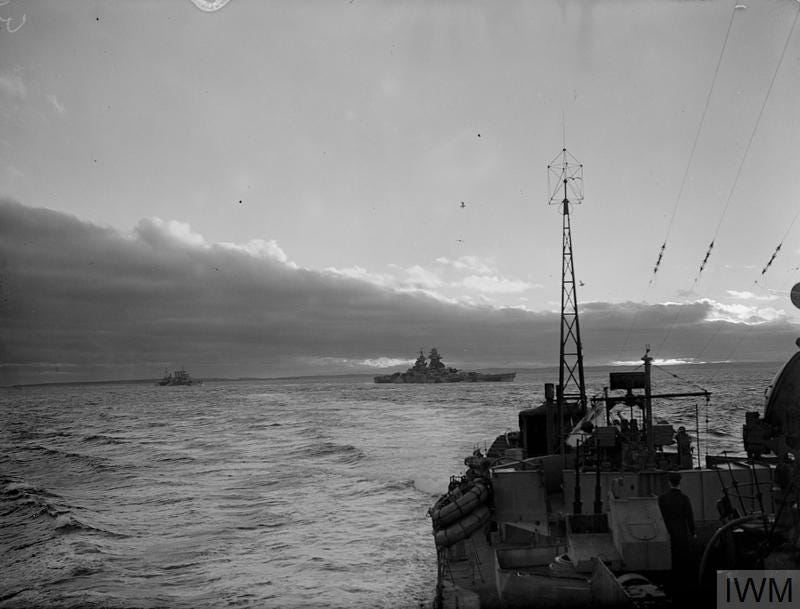
By August 1943 she was carrying out gunnery trials in the Chesapeake and by October she was sailing for the Mediterranean only to be reassigned to the British Home Fleet and on her arrival in late November she was fitted with gunnery radar allowing her to be active in a night attack. Much like the rest of the British battleships in the Home Fleet, the Richelieu saw no action but was always on standby for the Tirpitz or Scharnhorst moving out of the fjords. There was a sweep carried out off the Norwegian coast by the Anson, Richelieu and carrier Furious in February 1944 but only one freighter was caught and sunk. A follow up operation was cancelled after two of the escorting destroyers collided.
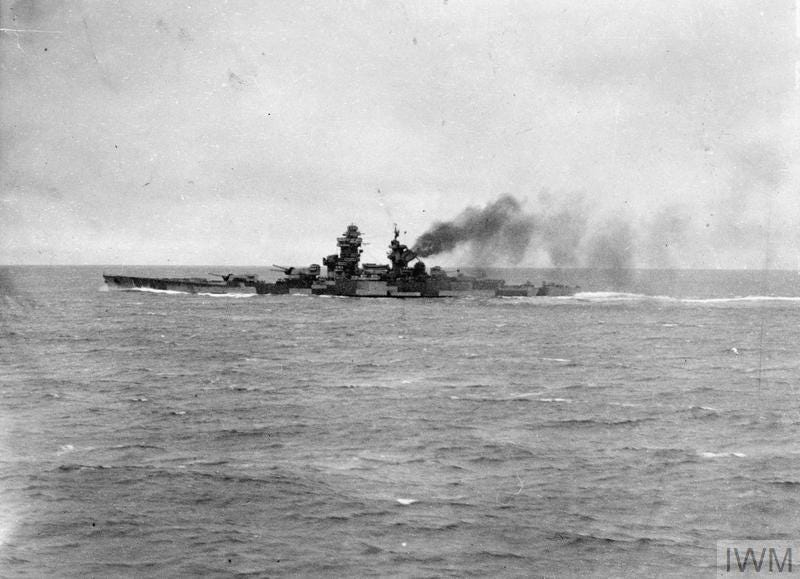
When D-day came around she was invited but as she only had Armour piercing shells it was felt it would be better to deploy her to the Far East fleet but the journey caused issues for the ship and her boilers broke down forcing a lay over at Aden though this did not solve the issue.
Her first sortie in the Far East was Operation Cockpit on 19 April with Richelieu operating with the Valiant and Queen Elizabeth whilst a force of carriers were escorted by the Renown. The force attacked Sabang as part of a diversion of Japanese forces away from the actual Allied target of Hollandia, New Guinea.
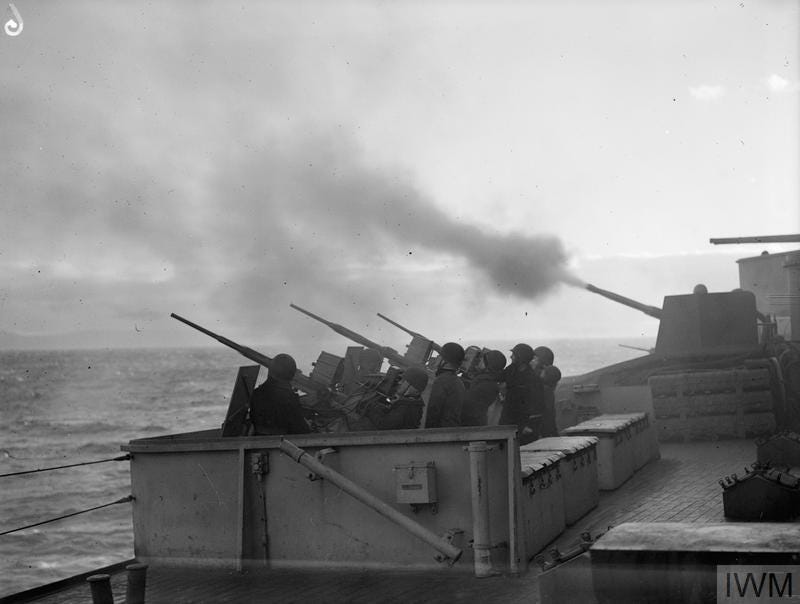
Operation Transom followed in May 1944 and was another diversionary attack to keep the Japanese looking away from the central Pacific where the US Navy was operating. This new target was Surabaya with its vital oil refineries. The Carrier borne aircraft carried out the strike with the loss of only one Avenger.
Similar raids took place with Operation Pedal (June 44), on the harbour at Port Blair to distract from the US Operation Forager in the Marianas Islands, Operation Crimson (July 44) to bombard Sabang and Sumatra but the uncorrected boiler issues had got worse and so Richelieu had to retire to Algiers for repair.
Richelieu left Casablanca at the end of January ‘45 and was to be the centrepiece of a French taskforce to reassert their power in the Far East with a few destroyers and four light cruisers which were able to sail. America was not keen on this idea, smells too much like Empire, and refused to supply any supply ships or carriers for the task force. Richelieu then had to travel alone and join the British.
Her first operation was Sunfish in April with ships providing bombardment the coast of Sumatra whilst aircraft scouted the Padang beaches for a possible landing. Richelieu fired seven salvoes and destroyed a coastal battery before being engaged by Japanese aircraft. Unscathed, the taskforce withdrew on the 20 April.
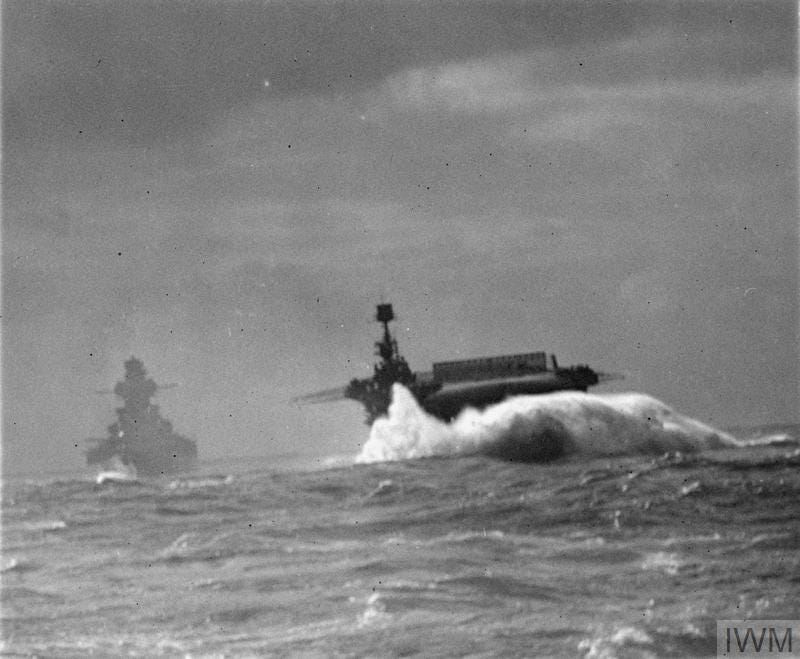
No sooner was Sunfish over than Bishop began which saw the force attack airfields at Nicobar and Andaman Islands to cover army landings at Rangoon with the French battleship firing at a range of 77400 feet with 80 main battery shells and forty five secondary armament being fired at the airfield. She went on to Port Blair but the visibility was poor and after half an hour she gave up having fired all of her 15” shells but returned on 2 May to fire her 6” guns and then on to Rangoon only to find the Japanese had withdrawn.
With news that the Japanese were attempting to evacuate the garrison at Port Blair the Allies sent a taskforce to intercept the heavy cruiser Haguro and destroyer Kamikaze with the Richelieu and Cumberland amongst the ships sent but the Japanese got wind of the Allies being at sea and withdrew.
This was the last action that she would be involved in as she withdrew for another refit and repair though she did take part in the landings at Sumatra in September (Operation Zipper) and also struck a mine causing a little damage and finally Operation Tiderace, the landing at Singapore.
As the French landed troops in Indo-China the Viet-Minh began to repel them and the battleship provided artillery support, floating hospital and troop transport for operations including during Operation Mapor that November before she left for home in December ‘45.
Her Post War career was somewhat disappointing with refits, training as part of the “Force d’intervention”, a French Naval taskforce that could be sent to deal with any problems quickly and a long period in reserve as the French budget was in an understandably poor state post war and unable to sustain the major refit she required and modernisation was out of the question.
Her final duties were as a training ship for gunnery until February 1956 before being put into reserve and made a floating barracks and school. In 1968 she finally was sold for breaking.
Thanks for sharing this.
She was a beautiful ship.