
Send in the Marines
The Dardanelles attacks of 4-5 March

Yesterday the long waited for landing covered by the R.M. brigade “Winston’s own” took place in lovely weather. It was not a success. I will write an account of it for my diary and refrain from infringing the censorship! The casualties will be published so I will say that they lost 19 killed and 23 wounded - 3 missing. - Roger Keyes in a letter to his wife 5 March 1915
Finally the weather in the Dardanelles Straits was good enough for the employment of a large landing of two Companies of Marines, one for each shore, under the watchful guns of the Royal Navy’s older pre-dreadnought battleships.
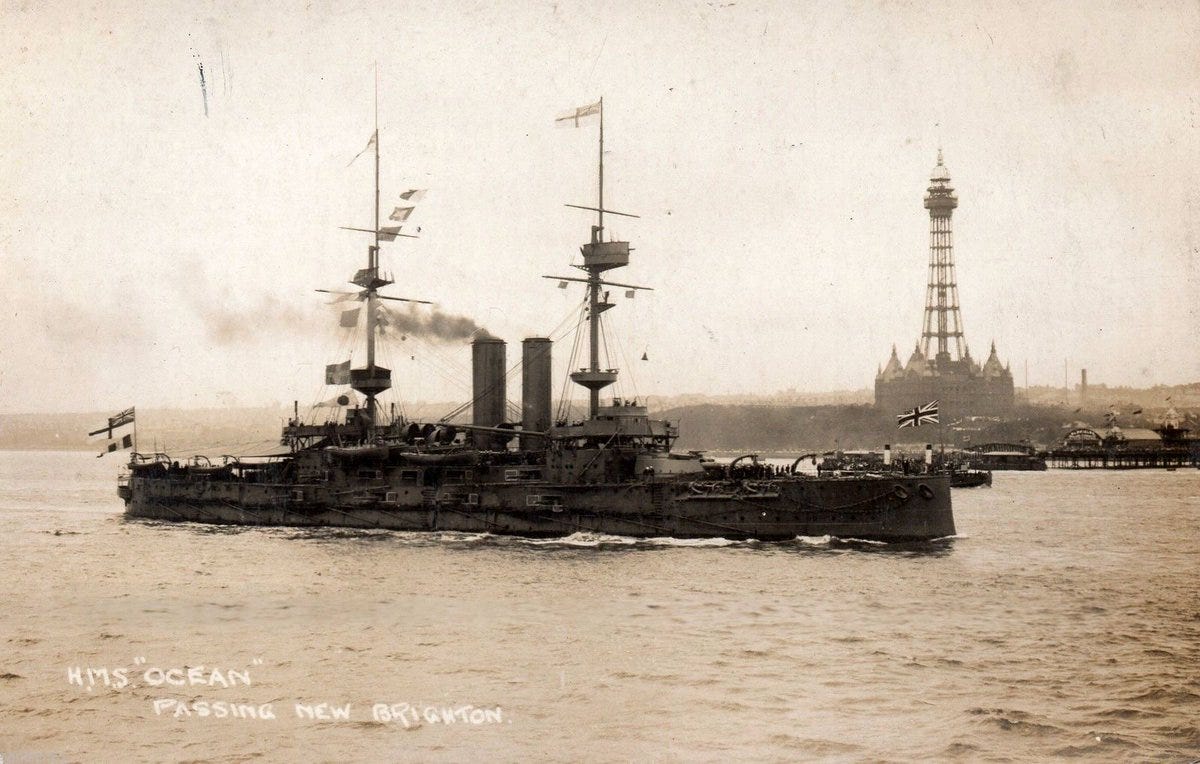
HMS Ocean under Captain Hayes-Sadler would lead his ship to Sedd el Bahr with the Lord Nelson to Helles and Majestic out to Morto Bay whilst the Irresistible, carrying de Robeck’s flag would attack Kumkale, Cornwallis, off the Mendere River and Agamemnon and light cruiser Dublin near Yeni Shehr.
The Canopus was to try and draw off Ottoman forces by attacking the Aegean coastline between Yukeri Bay and up to Bashika Bay to stop the Ottomans from reinforcing Kumkale. The Inflexible would also be present at the mouth of the Straits for support.
The destroyers brought the Marines up from Imbros and split to their respective sides of the Straits whilst General Trotman directed the attack aboard the Wolverine.
The party was put off from the ships in ship-boats, towed by steamers which were armed with maxim guns and light Q.F. guns in the bows.
Nothing happened until the boat was within about 300 yards of the beach, and then Abdul opened up a fusillade of fire from various points in the hills, and from the village itself. It was splendid to see the way the men received their “baptism.” Every one was perfectly cool and collected. A man dropped here and there, but still the boats went on in a cool, methodical sort of way. Luckily it was only rifle fire; had the Turks been armed with a few field guns or light Q.F.’s there would have been few of our landing party left to tell the tale. - Petty Officer Cowie HMS Majestic.
Lieutenant-Colonel G. E. Matthews, the Commander of the Plymouth battalion landed his men first and at 9:00 a.m. a force of Marines, scouts and the demolition party went ashore from the Lord Nelson under Lieutenant Commander Dodgson at Kumkale pier.
The earthworks of Kum Kale fort ran out into a promontory, and between them and the sea was a narrow strip of flat sand, which, as one followed it along the western shore, broadened out into a wide beach on which stood in picturesque idleness two of the windmills of the country. Behind the beach lay the first houses of the village. Eastward a trestle pier jutted into the sea and the thin riband of sand widened into a foreshore, which continued for a mile and a hal, until it was brought up to short by the forbidding cliffs on which the village of Yeni Shehir perched rakishly. - Stewart and Pershall HMS Cornwallis.
The Cornwallis moved up to the Mendere River and began shelling the fort as well as the rear of the village to keep Ottoman forces from engaging the vulnerable boats of marines though not entirely successfully.
As the boats approached Kumkale they were fired upon by snipers in the village that shared the name as the fort whilst the fort at Orhaniya Tepe (fort 4) was seen to have a large force of enemy infantry. Despite this there were no casualties in the boats as they approached and it wasn’t until the men landed that the first deaths.
At the trestle pier, out of four patrols of five men each which got ashore only five men survived. The entire length was under the fire of Turkish snipers concealed in the houses. - Stewart and Pershall HMS Cornwallis.
As soon as our cutters had reached the shore they had a fierce musketry fire opened on them by snipers concealed in the ruins; they also fired on our boats with their Nordenfeldt guns. Luckily no one was hit before landing, but as soon as they mustered on top of the pier they had to lie flat; some of them were wounded and they had to make dashes to get clear of the pier and behind cover. We were watching all this through our glasses and could see our poor devils getting a rotten time from these snipers who could not be seen. H. M Denham HMS Agamemnon
The landing was instead directed towards the end of the earthworks and along a narrow strip of sand and advance towards Orhaniya Tepe’s fort, all under the the sniper’s line of sight despite the fire from Cornwallis.
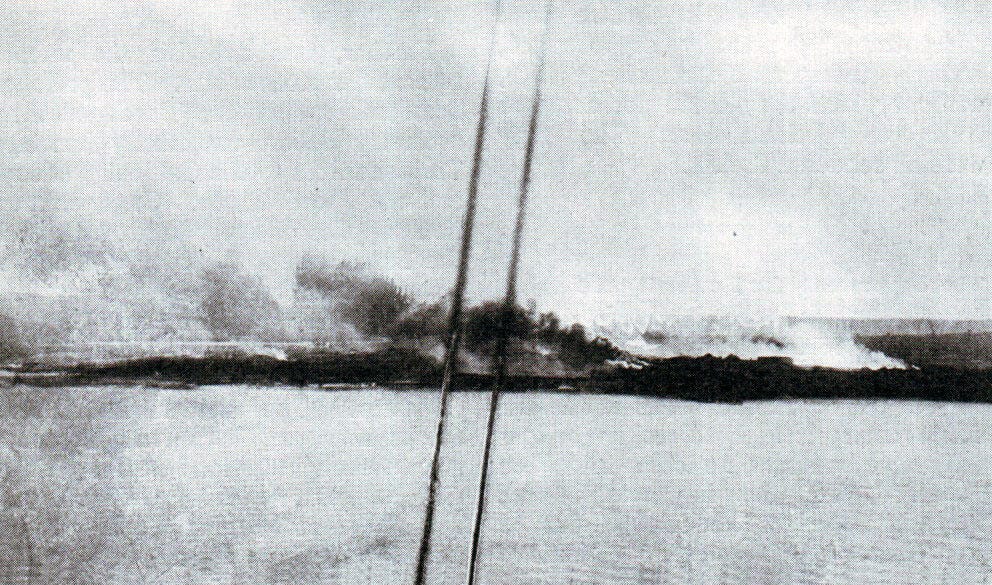
The necessary pause in actions due to the days of bad weather gave the Ottomans time to reinforce the area and having seen what the British had done in their previous attacks they worked out what was the logical next step - a landing.
The Cornwallis’ spotters could see Ottoman troops reacting and passing through the cemetery and on to Yeni Shehr and along with the Agamemnon they opened fire upon them with a rather successful bombardment.
Our marines were trying to support the Lord Nelson’s demolition party to demolish Fort No. 4 as there is still one big gun mounted there which is jammed on one bearing. We continued firing our 12-pdrs at Yeni Sheir village and at the cemetery, where there were Turks concealed with their guns. Irresistible and Cornwallis, firing on Kum Kale village, unluckily landed one shell on their demolition party. HMS Agamemnon
They also could see howitzer and gun positions but were unable to do much about them at this stage especially as the day wore on and the gunners were unsure where the Marines were. The Navy’s gunners, although more than willing and able to support the Marines and demolition parties, found that this principle was easier said than done as they didn’t know where their forces were at any given time, hence the friendly fire incident mentioned.
The plan for the southern landing force was for the Marines to push into the fort and pass through Kumkale village south of Yeni Shehr and hold on to it for three hours which would give the demolition teams time to locate and disable as many of the Ottoman guns and fortifications as they could as well as reconnoitre ground for a possible aerodrome for the RNAS.
As is always the way with plans, they never go the way they were outlined and the Ottoman forces occupying the village became a real issue with snipers firing from houses and windmills and howitzers showering the British forces with shrapnel and forcing them to take cover against the walls of the Fort.
The Navy responded with heavy firepower as Irresistible demolished the windmills and the destroyer Scorpion moved in close and fired on the artillery batteries before moving on to drop shells on the village forcing some of the Ottomans to withdraw. This allowed the British force to recover demolition gear from the Pier and press on, although they did leave the heavy machine guns behind due to enemy fire. A group of volunteers from Agamemnon went to recover them and Leading Seaman Ludgate, of the Agamemnon, crawled, with two marines and an Able-seaman, along the beach to the pier to recover the guns.
On the pier lay the bodies of those gallants who fell early in the fight. Four maxims had been abandoned there by us in the disastrous landing and during the day one of these was recovered by a marine, who dashed down the pier regardless of the phut! Phut! Of many bullets. He brought the gun back on his shoulder. The other three were retrieved by a volunteer cutter’s crew. - Stewart and Pershall HMS Cornwallis
At this time at Seddul Bahr, the Ocean was engaged in trying to disperse a Ottoman strike and trench works and they were joined at 10:20 a.m. the Agamemnon joined by firing on the beach near the cemetery and at 10:50 a.m. the Inflexible joined them.
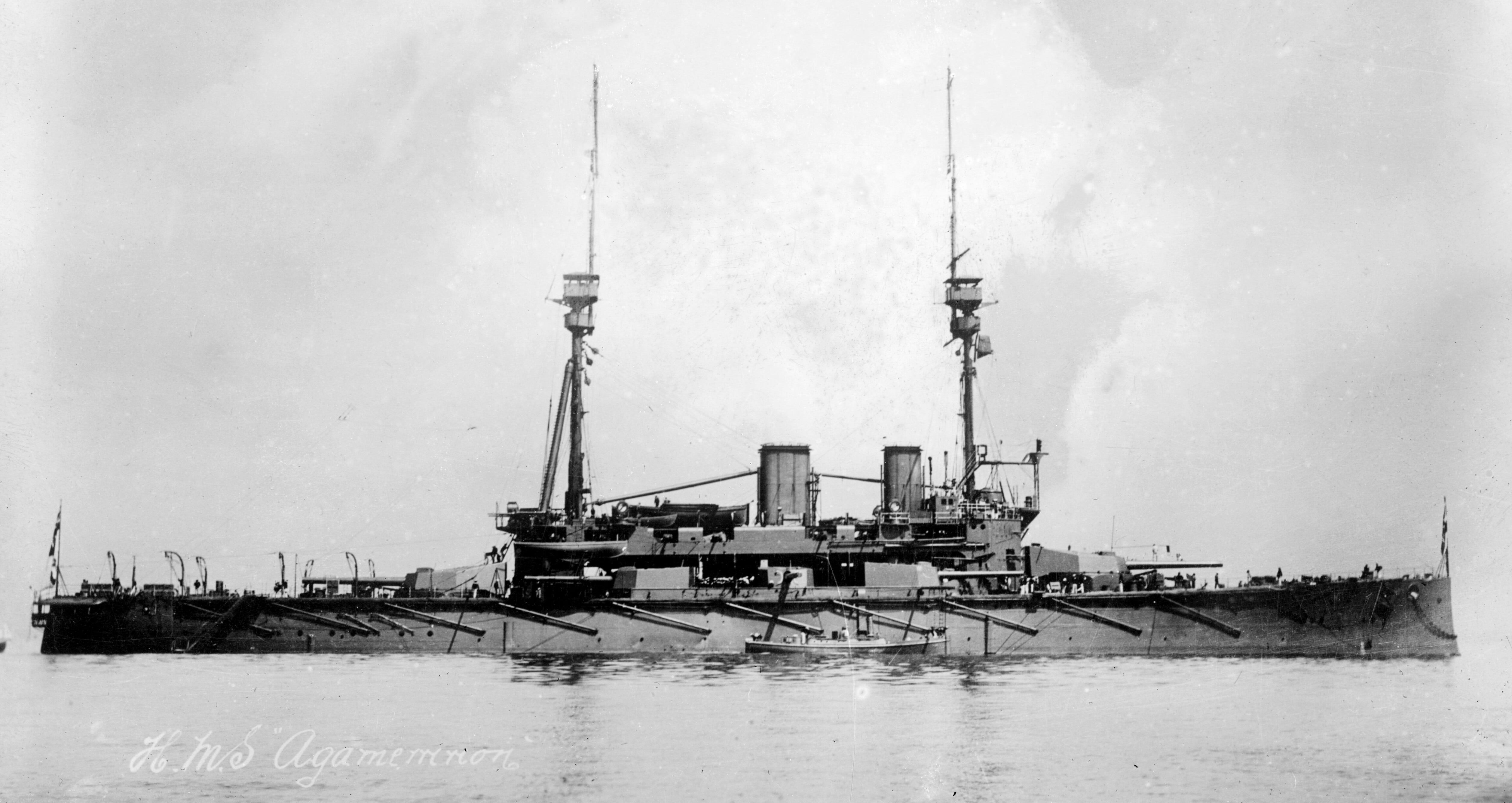
At 10:50 a.m. Agamemnon began firing on a gun near the Yeni Sheir village and her observers also spotted anti-aircraft fire coming from Aren Kioi as one of Ark Royal’s seaplanes flew over.
Back at Kumkale the landing force had pushed into the village but rapidly became bogged down by the withering fire from the houses and further support from Cornwallis and Irresistible was needed but it took a further ninety minutes to bring the rest of the landing parties ashore and to push through the village.
From where we were we could see the Turks sheltering behind Fort 4, and as we had a clear target on masses of the enemy we opened fire, enfilading them. It was a glorious sight to see our shell scatter them, and we got in a number - we could see the shell-burst knocking them over, and in the midst of it the Admiral sent us an encouraging signal: “Good shooting on Fort 4. You seem to be shaking the Turks.” - Stewart and Pershall HMS Cornwallis
Once past the village and in the open ground they ran into the Ottoman rear guard which was trying to enfilade the British line of advance. Again the battleships were summoned and their fire stopped this Ottoman manoeuvre.
When the Turks ran to cover in the buildings at the back, we put several lyddite shell slap into their shelters. Most of the time we were under a hot fire ourselves, and many shots dropped uncomfortably close, over or short. One just missed the stern and burnt on striking the water, fragments hitting the stern-walk. - Stewart and Pershall HMS Cornwallis
It was 2:45 p.m. and Colonel Matthews finally felt that he could advance to the Orkanie battery.
Matthews pushed forward with an advanced guard of Marines and the demolition parry but any optimism that had been felt rapidly melted away as heavy rifle fire from near Achilles’ Fountain and fresh trenches which had been dug on the slopes of Shehr Hill, stopped the advance. The party tried, repeatedly to press on but each attempt was met with failure and cover on the beach was sought.
So if advance was impossible could the Marines hold the territory they had taken and give the Demolition parties time to carry out their duties?
Matthews did not believe so and after an hour the Ottoman’s dogged resistance made such a position, in his opinion, impossible and the only option open to him was to withdraw and a request for the destroyers to move up to Yeni Shehr to enfilade the Ottoman trenches was sent and the cruiser Amethyst and destroyers Scorpion and Grampus moved in. The reserve would come up and form a rear guard.
More vessels such as the destroyers Renard, Wolverine and Grampus joined the Amethyst whilst the Agamemnon and Dublin took position off Yeni Shehr and the Cornwallis began shelling howitzers on the ridge whilst using her secondary armament to hit the barracks at Orkanie. This bombardment bought Matthews enough time and cover to withdraw his men without any further issue from the fortified positions but not from the cemetery where fresh fire from men amongst the graves made his situation warmer than he would have liked causing the reserves to be called up to scatter the enemy. Despite the British machine guns, which had been mounted on the fort’s walls, Ottoman snipers continued to take a toll and cause mischief amongst the British forces as they pulled back to the fort and it was only night fall which ended their fire.
Some British stragglers were cut off and left behind on the beaches but an armed boat from the Scorpion made regular sweeps between Yeni Shehr and Kumkale for several hours. In all Matthews had lost seventeen men killed, twenty four wounded and three missing with no objectives obtained.
So the southern force had failed in its operation, though through no fault of their own, but how did the northern force fare?
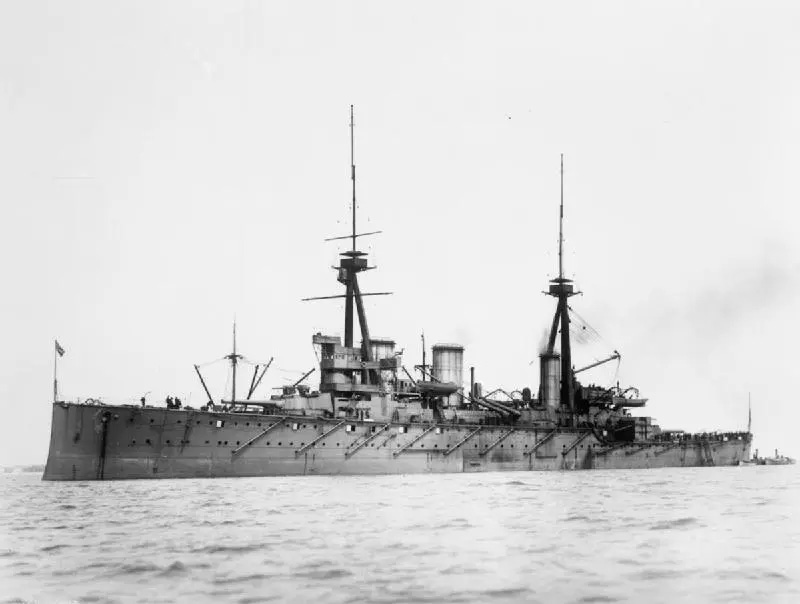
Major H. D. Palmer of the Plymouth Battalion led Marines and a demolition force drawn from the Inflexible and Ocean under the Lieutenant-Commander Frederic Giffard, was landed with orders to to take and hold a line from Morto Bay up to Tekke Burnu and again hold it for three hours whilst Giffard carried out his duties.
Ocean’s shelling was quite effective at Sedd el Bahr whilst the Majestic attacked the castle at Morto Bay and trenches reported by the Ark Royal’s seaplanes.
The landing was successful and the men advanced up a steep path that came out between the fort and the nearby village but this open space was a perfect spot for ottoman fire to rain down upon them and it had been presighted with expectation that the Marines would come this way.
Moving further forward was impossible along the “easy” way and instead two more difficult options were tried - scaling the cliffs up to the village and to infiltrate the fort through shell damage.
The enemy fire was still to accurate and heavy which meant these attempts also failed forcing the men to take cover and the ships to be summoned for assistance.
The ships came to the rescue and began to deluge the hills with shrapnel, but though the damage done was undoubtedly great, the advantage was always with the enemy, and to have continued the advance in the face of circumstances would have been madness. - Petty Officer Cowie HMS Majestic.
Majestic opened fire causing havoc amongst the Ottoman forces with a building being used to provide enfilading fire completely destroyed and the snipers forced to withdraw to the old castle. Unlike the southern attack the Landing force were able to advance and take Sedd El Bahr fort and the village entered but they could not push further into the hinterland due to gunfire from the trenches near the castle and the heavy guns but Palmer was certain he could press on, if he could get a further two hundred men which Hayes-Sadler on Ocean was happy to provide. This was overruled on the advice of Trotman who was with de Robeck on the Irresistible, who believed it would do no good to land more men and would just see further casualties.
At 1:40 p.m. the Majestic along with Ocean finished a successful bombardment of the old castle which saw the Ottomans again falling back but not before a shell from In Tepe struck the Majestic quarter deck.
For a time, however the ships’ guns continued “searching” the hills, and I can vouch for some execution, for we were fortunate enough to catch a large party of Turks in a ravine, where they got it hot from both common and shrapnel shell. There was no means of escape for them, and we could see the flying fragments of the shells strike in every direction, thinning their ranks until they withered away.
We didn’t get off scot-free though; a 5-inch shell from the Asiatic shore hit the Majestic about the starboard after-gangway, went through to the paymaster’s cabin, which it completely wrecked in addition to damaging the cabins on either side of it, and ended up setting the place on fire.
The career of that shell was extraordinary. It came in on the starboard side, went through the cabin, across the deck, smashing a ladder in its flight, bounced off the side of the turret, took the top of the rail leading down below, hit a beam overhead on the port side, threw a heap of splinters into the wardroom pantry, which cut open the steward’s head, and then finished its course on the deck below, where a large piece of it was pounced upon by a signalman. All that fuss, and not one casualty beyond the steward’s broken head! Petty Officer Cowie, HMS Majestic.
Time was of the essence though and there was only a couple of hours of decent light left and it was considered to not be enough to press the advantage and instead a withdrawal would be carried out. The two ships resumed firing and the Landing force fell back and were back aboard ship by 3:30 p.m.
Three men were killed and one wounded for the destruction of two Nordenfeldt guns. Hardly a success but fat from a disaster!
It was clear that the Allies… well Britain, were moving too slowly and the belief that British naval firepower alone being able to carry the day had dominated the planning phase for too long and the deployment of small landing forces came too late. With the weather giving the Ottomans enough time to reverse earlier British successes and build up defences it became even more obvious that a proper landing force was needed.
However there were lessons learned;
We know something now of the difficulties with which the joint operations of sea and land are encompassed. During this most regrettable day, in which we lost forty killed and sixty wounded, the signalling between the two forces was incomplete, and we never knew what part, if any, of the village was occupied by our men and what by the enemy. - Stewart and Pershall HMS Cornwallis
There was also a story of war crimes, I cannot verify it but the story, as retold by Stewart and Peshall’s memoirs of their time aboard Cornwallis, stated;
A story reached us of a sergeant of marines who fell in the first landing from the Vengeance, wounded in the legs only. Later when a party of marines went to rescue him, they found his body full of bayonet wounds. A German caught near by was put against a wall promptly…
The following day the Queen Elizabeth began her assault on the inner defences with her 15” guns which many believed would be very effective against the defences. Bigger larger shells and more fire power would carry the day against the five forts.
The lowlying forts were fairly modern following their remodelling and rearming ten years prior.
Three of the forts were near Kilid Bahr on the European side; Fort Rumili Medjidieh (no.13), Fort Hamidieh II (no.16) and Namazieh (No. 17) armed with two 11”, two 14” and sixteen howitzers respectively along with five 9.4” guns below the latter. There were further guns nearby this group including a battery of 9.4” guns, three 8.2” guns and a further six 9.4” guns and two 11” on the eastern face aimed across the Narrows. Most of these guns were old but still of use.
The forts on the Asiatic side at Chanak were much more formidable. The Hamidieh I (fort No.19) was close to the beach with its guns facing the entrance of the Narrows with two 14” guns (with a range of 17000 yards) and seven 9.4” guns able to reach 15000 yards) using modern range finders manned by German artillery spotters. Fort 20, Chemenlik just past Hamidieh I, was armed with a 9.4” and one 8.2” guns looking across the straits and two 14” guns firing from south-west to north-west and their fire was supplemented by howitzers and Nordenfeldt guns.
The Super-dreadnought was to move up the peninsula to a previously swept bay near Gabe Tepe and use landmarks, such as the summit of Haji Monorlo Dagh, as a reference point and reports from spotter planes for spotting. The usual deployment of an anchored close range spotting ship had to be abandoned as the previous days had demonstrated the other forts had not been completely disarmed and it would be too dangerous. Instead they must be kept moving which would make their fire inaccurate but mean they would be harder to hit. Up stepped Cornwallis, Irresistible and Canopus to make runs twelve minutes apart as far as Kephez Point before crossing the Straits and back firing on Messudieh, Dardanos and White Cliff if any guns were sighted.
Agamemnon watched the entrance of the Straits and Dartmouth the Bulair lines to report Ottoman troop movements. As insurance, the Prince George was to keep close to Queen Elizabeth in case a close range gun opened up upon her.
The ball opened up at midday with the Queen Elizabeth striking back with her guns firing on Rumili Medjidieh. The first two spotter aeroplanes took off to spot for the super dreadnought but met with misfortune with one suffering engine failure and crashing into the sea and one with a wounded pilot, who was clipped by a bullet and forced to withdraw. With no spotting the gunners had to rely on their own ship’s reports which meant a certain amount of guess work and the poor afternoon light made the challenging, difficult. It was also found that having multiple spotting ships actually caused more issues than they resolved and it was decided for future operations that a solitary moving vessel would be best.
Not so for the Ottoman gunners though as they struck Britain’s newest and most modern dreadnought seventeen times, though causing little damage. This was of great relief as the Admiralty were very wary of exposing their new vessel to undue attention and risk. There was also an order not to over use the guns and wear them out.
Ten shots were dropped on Fort Rumili and then fire shifted to Hamidieh II where a magazine was seen to explode, and then on to Namazich but light was failing and Queen Elizabeth ceased firing with the Admirals believing that they had demolished Rumili and Hamidieh whilst the troublesome intermediate forts had remained quiet.
Still no headway had been gained but the clock was ticking towards an inevitable showdown…