
Ace killing
The Royal Navy's use of Radar and sinking of Schepke

The death of Prien and Schepke and the loss of U-99 were particularly heavy blows to me and my staff. Schepke had been a real thruster and had done exceptionally good work from the very beginning; in all he had sunk 39 ships with a total of 159.130 tons. - Karl Donitz.
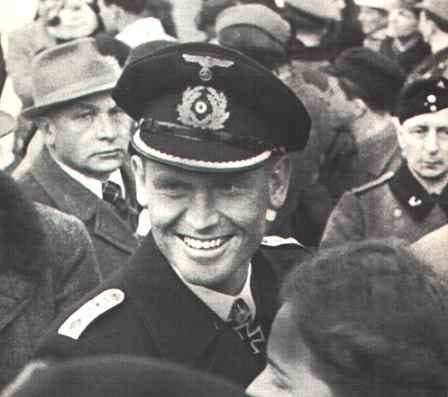
Kapitanleutnant Joachim Schepke, the Commander of U-100 was an upcoming U-boat ace and was one of the top three aces by early 1941 despite his tendency to overstate the size of the shipping he had sunk. He had been born on 8th March 1912 in Kiel, later joining the navy in April 1930 where he served on the Deutschland and Emden before transferring to the U-boat arm in 1935. After serving as an instructor of the Torpedo School in Flensburg he took command of the U-3 where he sank the two neutral ships, the Danish Vendia and Swedish Gun on the 30th September 1939. After a spell on U-19, during which he had sunk nine ships in three and a half months, he moved to U-100 and he immediately began sinking ships. By the end of 1940 he had sunk thirty seven ships in his career for 155,882 tons with seven of them sunk in only two days!
Schepke became a hero for Germany receiving the Knight’s Cross in September 1940 and in December Oak leaves before giving a speech to young Germans at the Berlin Sportpalast on the U-boat war in February 1941. He was one of three U-boat aces that were heralded as the face of the Kriegsmarine and who were taking the war to the hated British blockade which threatened to strangle Germany as it had in the previous War. The others were the hero of Scapa, Gunther Prien and “Silent” Otto Kretschmer and much like the Luftwaffe aces, Molders and Galland, they competed in their own way.
By mid March 1941 Schepke was part of a wolf pack that was hunting Convoy HX 112 having left Kiel on the night of 9th March before a lay over at Brunsbuttel to see a crewman taken off for medical reasons and an engine repair that was not finished until 12th March.
The convoy was sailing east and had left Halifax on 1 March 1941 bound for Liverpool with most of the ships being oil tankers, a vital cargo at this stage of the War. The escort was provided by the destroyers Walker and Vanoc and two corvettes under the command of Commander Donald MacIntyre. They were sighted on the 15th March by Fritz-Julius Lemp’s U-110 who signalled their position and began to shadow the ships whilst the wolfpack began to move in ready to strike on the night of 15/16th.
Lemp tried his hand first with a torpedo attack on the tanker Erodona between 00:18 - 00:22 a.m. with three torpedoes launched at the convoy in the dark with the Kapitanleutnant claiming one tanker and one steamer lost. The Erodana did catch alight with a direct hit on tank 4 which killed thirty four crew and two gunners and forced the rest of the men to abandon ship. The ship was rescued though and taken in tow by the tug HMS Thames and she was brought into harbour on 30 March though it would not see service again until 1944.
As night became day the U-boats surfaced and followed the convoy on the surface staying out of range of the escorts before moving in to attack at nightfall on the 16th. Whilst Kretschmer was very successful and sank five of the vessels before U-99’s capture - but I’m working on something about that - but what of Schepke?
Schepke was approaching from the north and reported sighting two destroyers with one being sighted astern forcing them to submerge immediately and managed to survive a depth charge attack unscathed. They surfaced astern of the convoy after nightfall hoping the inky blackness would help cloak them from prying eyes, a tactic that had worked for the U-boats before as the British could only detect them once they were underwater with ASDIC and relied on lookouts for spotting. Unknown to Schepke and his men though, the Vanoc had been equipped with one of the first surface radar sets and the U-100 was now on their sets.
Despite reports from the U-99 that there were three destroyers escorting the convoy the U-100’s crew sighted eight destroyers and an auxiliary cruiser and dived again for safety as three destroyers moved to intercept them and the remaining five headed away with the merchant ships.
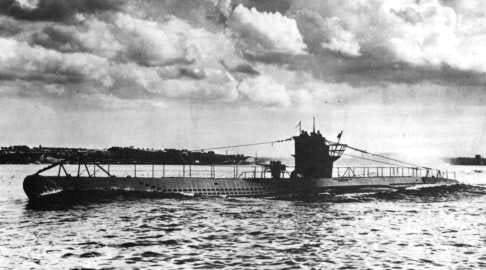
Once at a safe depth the U-100 came under the inevitable depth charge attack and the crew stood at their stations listening and waiting for the inevitable but the first four to five depth charges exploded close to the U-boat but did no damage beyond the depth gauge and some of the light bulbs exploding. The tension and fear masked by professional sailors would have been palpable but Schepke kept his men together.
This was only the beginning though.
More depth charges followed and damage within the boat became more extensive with instruments smashed, the pumps disabled and even the compressed air gave out and with a fear that the British would detect the escaping air. When the floor plates were ripped up they saw that there was water entering the bilges and it was reported that the hydroplanes may no longer be operational.
The U-boat was sinking under the barrage of depth charges and had reached 750 feet (the safe operating depth) and the temperature had dropped within the hull. They were not to be killed by the explosions that would decompress the hull, rather that the hull would be crushed by the very sea pressure and the men began to falter.
The three hour long barrage is described in the Interrogation report as;
It seems likely that the attacks referred to are “Walker”’s attacks at 0137-1/2 with nine depth charges with deep settings and at 0153 with eight depth charges with medium settings and “Vanoc”’s attack at 0157 with six charges set to 350, 250 and 150 also “Vanoc”s attack at 0232 with charges set as before. After all these attacks a strong smell of oil was noticed, and after the last attack a bubbling noise was heard in “Vanoc”’s headphones.
Schepke realised that the U-boat could not stay below any longer and that they had to make a break for the surface.
The Vanoc, having heard the sound of what they believed was a U-boat breaking up, backed up by the oil seepage, had begun to move away and when U-100 reached the surface they were about 500 metres away. The torpedo tubes were not quite cleared for action but Schepke ordered a salvo to be fired at the unwary escort unknowing that they were already on Vanoc’s radar screen. The destroyer moved to ram the submarine.
Surely at 500 metres the U-boat would have time to move out of the way of the destroyer as it bore down upon them?
The Diesels of U-100 would not start, and it was found that they were not getting any fuel; then trouble was experienced with the electric motors. The Captain became flurried and gave a wrong order, he ordered astern on the starboard motor, whereas he should have ordered ahead on the starboard motor. He quickly realised his mistake but there was no longer time to correct it, and to turn the U-boat and fire a torpedo as the destroyer was approaching too fast, and by that time was too late. - Interrogation report of U-100’s survivors.
With the torpedoes needing to run 150 feet (45 metres) to be effective Schepke saw there was no point in firing and any real manoeuvre was impossible but by his estimates the destroyer would pass, close to him, but just astern but he was, again, in error.
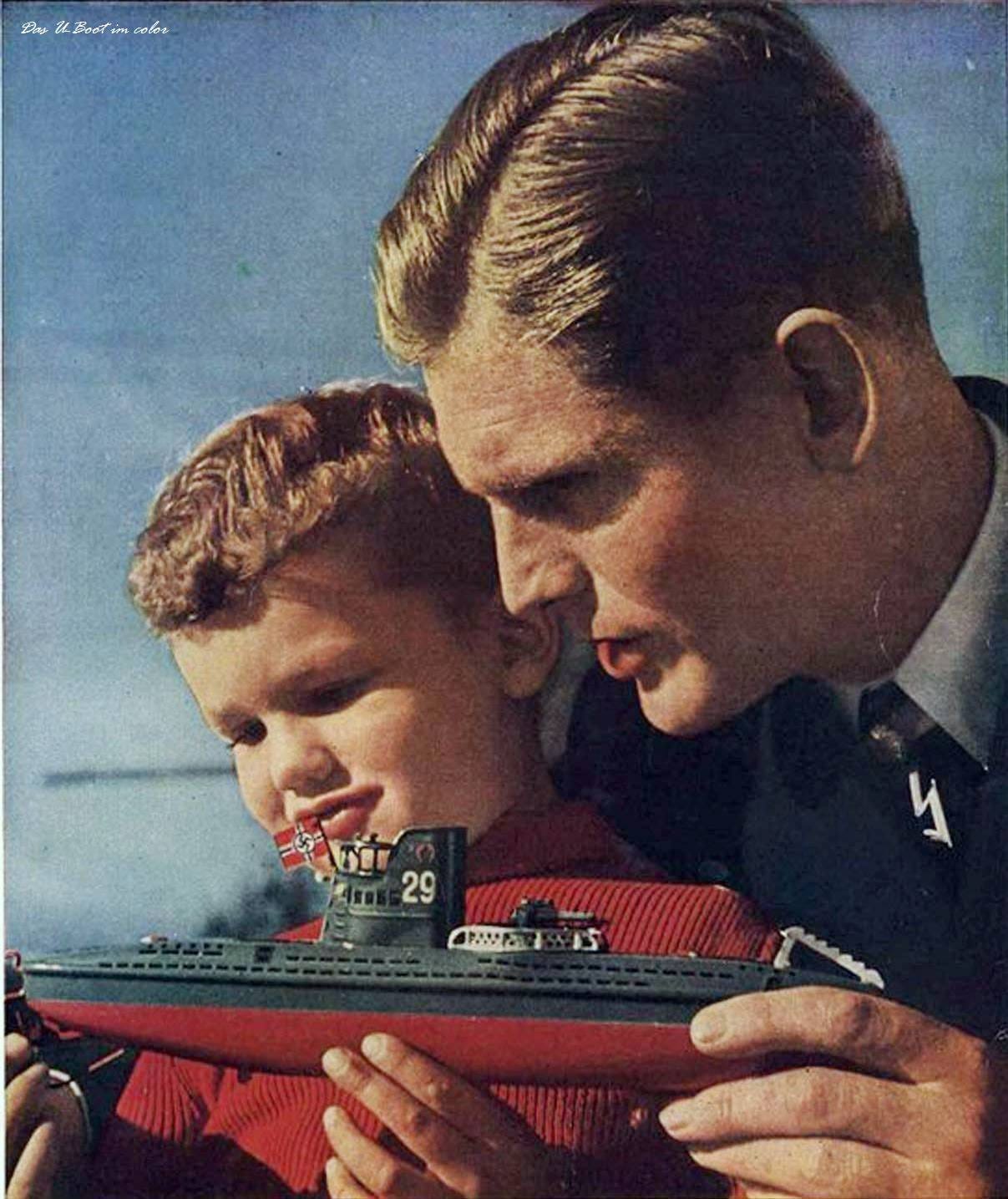
Upon realising his mistake he ordered the men to abandon ship believing that any signs of resistance or use of the deck gun would see the English leave them for dead and he hoped at least this way the survivors might be recovered.
It was 3:18 a.m. when the destroyer slammed into the U-100 at a right angle just before the conning tower smashing in the hull and conning tower. With her engines already stopped, Vanoc came to an abrupt halt. Schepke was crushed between the twisted hull and the periscope and mortally wounded. The I.O.W (Captain in training), Flister, who had been standing behind Schepke, was similarly caught up in the twisted guard rail and along with Schepke was pulled under the water. Flister managed to pull himself free and along with five other men, was rescued by the Vanoc.
In the cold of the North Atlantic and in the inky blackness no more could be done for the men who managed to escape and the Vanoc was called away by Walker to help with U-99, a clear and present danger.
The loss of a solitary submarine was a blow to the Kriegsmarine but one that could be shouldered. What was painful was the loss of an experienced crew and an “ace” who was popular and a propaganda icon, made doubly worse as two other aces, Gunther Prien and Otto Kretschmer were lost the same week with Prien killed on the 8 March and Kretschmer captured an hour or two after Schepke’s final dive. This was a horrendous loss of experience and knowledge as well as propaganda value of these young men which would have an impact on the submarine war and to Karl Donitz personally.
Very interesting I I watched a history channel documentary on the U-boat war a few weeks ago which was very interesting and your article add more detail.
Good article - thanks for sharing it.
Small point; it’s KretschsmEr with an ‘e’ not with an ‘a’.
LF